- Address: Zirņu 8, Riga
- info@krasa.lv
- +371 29217499 (Added WhatsApp)
- Working hours: Mon:10-17; Tue- Fri:10-18, Sat.:10-14, Sun: free


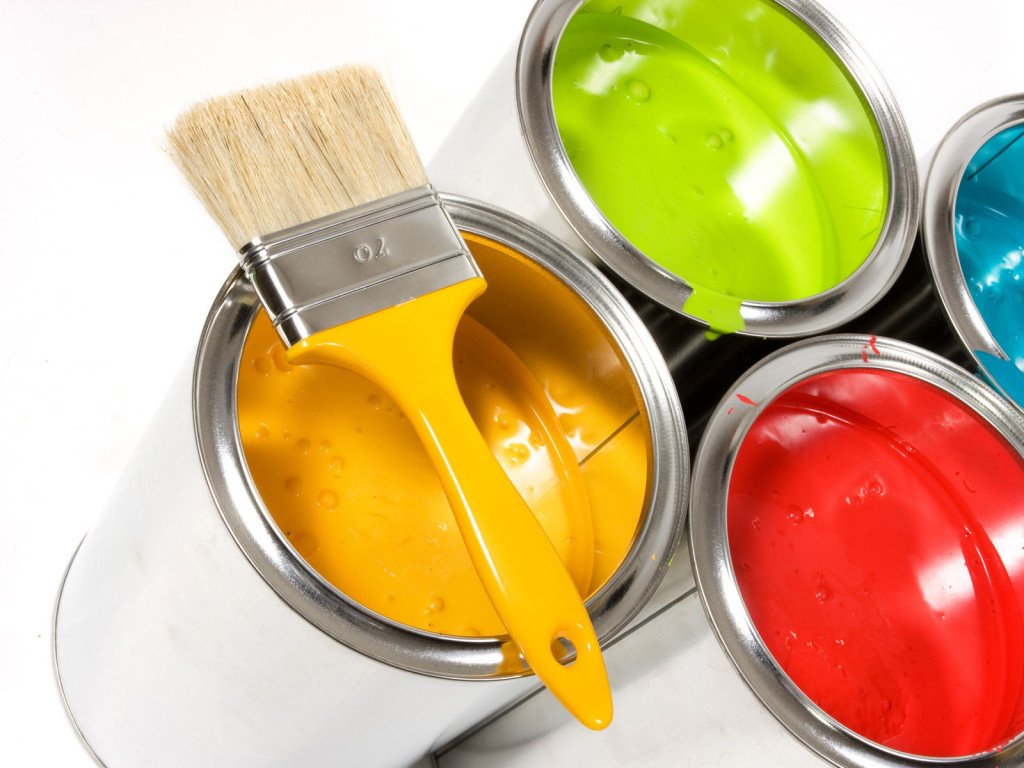
What do you need to know about paints?
How do paints divide?
Unfortunately, there is no one-size-fits-all paints for all needs. However, to choose a paint for home repair, you do not need to study the encyclopedia of paints. It is enough to know a few basic truths and manage to find a proper store with well educated and responsive salespeople. All paints can be divided into three main groups. This, of course, is not the only classification option, but useful enough to be able to navigate to the shelf of paints.
Solvent-based paints
These are paints known in Soviet terminology as oil paint or alkyd enamel – they used to be almost the only paint available, of course, unless you were lucky enough to get a water emulsion, which we’ll dwell on a little later.
Thus, in practice, solvent-based paints can be perfectly recognized by opening the can – it will give a characteristic, relatively strong aroma, which indicates that this paint contains organic solvents. These are volatile substances that give the paint a liquid consistency and evaporate to allow the paint to harden to form a durable, hard film-like coating. Alkyd resins are the most commonly used binders for these paints.
Organic solvents are relatively inexpensive products of the chemical industry, for which a considerable package of non-flattering properties can be deservedly recorded.
Of course, the harmfulness of these substances should not be overstated: there are many more dangerous substances in the world, and acute solvent poisoning most often occurs when working with paints without precautions (for example, in unventilated rooms). When the paint is in a closed container or has dried, it does not endanger people and the environment.
In addition, the practice of paint manufacturers today has moved far away from Soviet traditions. The most advanced and far-sighted manufacturers are trying to produce paints that contain as few toxic substances as possible, or to replace hazardous substances with less harmful ones (for example, by using relatively harmless white spirit as a solvent). However, there are still boxes on store shelves decorated with a black image on an orange background, which indicate the danger of the product: harmfulness, irritant properties or danger to the environment.
Water-based paints
Water is used as a solvent for water-dispersion paints, so they smell less intense and are more environmentally friendly and less harmful to health. In the last decade, water-based paints have been used almost exclusively for interior decoration, as they are easy to apply, do not smell, dry quickly, and the resulting surface is durable and washable. The popularity of these relatively environmentally friendly paints is growing, and water-dispersion paints are also available for painting not only walls and ceilings, but also wood and metal surfaces.
When applying latex paint, it should be borne in mind that it is almost impossible to get it off. An old layer of alkyd paint can be removed from the wood and metal surface with a stream of hot air and a trowel or a special varnish and paint remover, but these methods will not be suitable for removing acrylic paint. The surface must either be repainted or tried to be cleaned mechanically, but this will be a very labor-intensive process.
Traditional (natural) paints
The paints in both of the groups described above are freely available in stores and very common in construction. Much less is known today about traditional paints that were known to ancestors for hundreds of years but undeservedly forgotten as a result of the boom in the chemical industry.
Linseed oil paint
Linseed oils and substances that add color shades, – pigment – mixture
Swedish paint
Water, flour, iron vitriol, pigment
Wood tar paints
Wood tar, linseed oil, pigment
Lime paint
Lime milk and pigment
Egg tempera
Eggs, linseed oil, water, pigment
And other natural paints do not contain synthetic materials, which gives them significant advantages. When working, they cannot be poisoned by harmful fumes, they can be washed or cleaned relatively easily, they are permeable to steam, so they allow the material to breathe, these paints use natural pigments and binders, which can decompose completely without harming the environment. They can be used both for exterior and interior decoration, especially for the restoration of historic buildings, but with the growing interest in environmentally friendly building materials, these paints are also increasingly being used in routine renovations.
From the point of view of convenience, traditional paints also have certain disadvantages – they dry slowly (even for several days), are not always moisture-resistant, some are slightly soiled, and are not widely available. They are not sold in stores (or they are positioned as “exclusive” and very expensive), so the most realistic option is to order them for masters of paint or make them yourself, which, of course, is not as convenient as buying a ready-made store. But whoever seeks finds it.
– One of the advantages of modern paints is the ability to tint them. This can be done at home by mixing white with a commercially available pigment paste, or in a store with professional equipment. It should be noted that when mixing at home, you cannot get two identical tones, each “portion” will be a little different.
When choosing a color shade, it should be taken into account that in the store on the sample sheet it will look a little different than at home on the wall. The overall look will depend on the room lighting, the size of the painted area, the colors of other room elements and interior items.
When tinting in the store, bright, saturated colors will cost the most, especially orange and yellow. In turn, the cost of a light pastel shade will be several times lower.
– Manufacturers offer separate paints for radiators, windows, fences, different primers – do you really have to buy paint for each thing separately? Of course, radiators, window frames and fences can be painted with the same universal alkyd enamel. However, in some cases, if you need to achieve a very good result, it is worth choosing special paints. Its radiator paint will be washable and resistant to high temperatures, the paint of fences is suitable for rough, uneven, unplaned wooden surfaces, while the paint of windows is especially flexible and resistant to environmental influences.
– Sellers’ recommendations to take primer as well can be seen as a desire to sell as much as possible, but in most cases it is really justified, because the primer layer fills the surface pores, thus reducing future paint consumption and provides better paint adhesion to the surface. Thus, in some cases, priming can be dispensed with, but in most cases it is still recommended for economic reasons.
– For separate paints have a number (0 to 90) that indicates the degree of gloss of the paint. The higher this number, more glossy the paint. Paints with gloss levels from 6 to 10 are matte, from 61 to 90 – glossy. The glossy surface is decorative, but it requires a well-prepared, smooth base, because the glossy paint reveals and highlights all surface defects.
Thixotropic paint
Thixotropic or non-drip gelling paints are liquid and flowable when painted, but when they remove the tool they regain their original viscosity and therefore do not drip or run off vertical surfaces, as was the case with Soviet-era alkyd paints.
These paints look too thick in the can, but they must not be diluted!
- Address: Zirņu 8, Riga
- info@krasa.lv
- +371 29217499 (Added WhatsApp)
- Working hours: 10-17, Saturday 10-14, Sunday: free