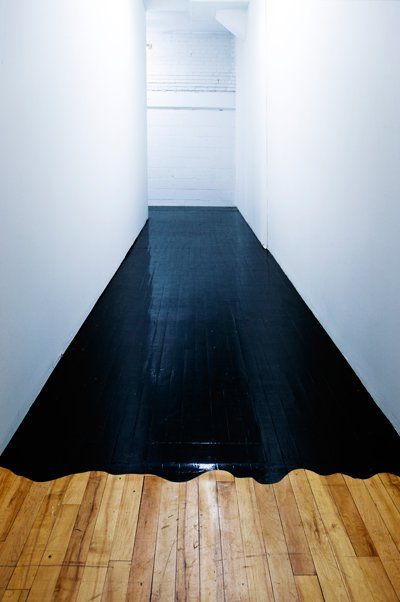
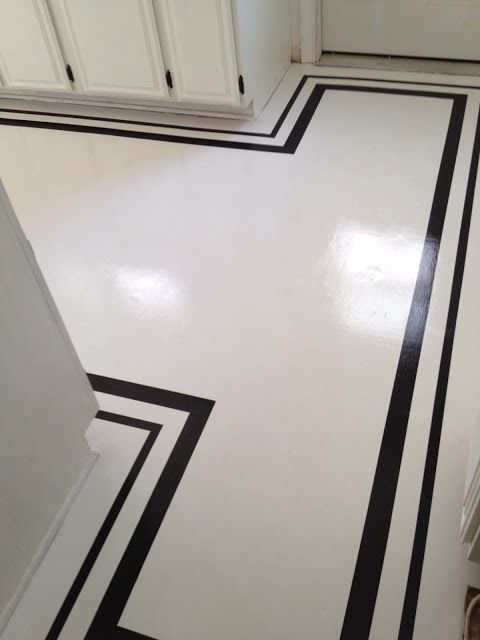
We paint the floor!

Worn floor paint is a common phenomenon, nothing is eternal and needs to be simply restored.

Over time, the floor wears out, especially at the thresholds and more frequently used paths, such as from the kitchen to the bed.

First check that the old layers of paint adhere well to the floor. If present, wipe thoroughly and wash. A common thinner, such as 646, is useful for degreasing and others, or any special cleaning agent suitable for the paint, which will also ensure better adhesion. Fill the gaps with floor putty and sand the unevenness with medium-grit sandpaper.

If the old paint forms bubbles, it must be removed, otherwise it will continue to peel off with the new paint. The rigidity is checked with an ordinary knife, nibbling the layers. If they separate easily, putty. Depending on the condition of the floor, use a construction hair dryer, sander or planer to remove the paint. The simplest and quietest to do this is with a hot air gun and a painter’s trowel. Such an operation does not require special skill either. However, the quality of the boards must be checked.

Sometimes worn floorboards are changed to the other side and planed again. Grinding equipment is simple and suitable for amateurs, their rent depends on the model of the device and company regulations.

Before treating the floor, remove the baseboards, drive the nails deeper into the floor with a hammer and dorn. This work must be done carefully, as shallow nails can damage the grinder, and with sanded heads they no longer hold the boards.

The floor is sanded diagonally from corner to corner, back and forth. Then the process is repeated across the other corner. Better results and quality can be seen if the room has a spotlight that provides strong side light. First sand the boards with coarse sandpaper, then take the finer ones. The condition of the sanding belt must be checked regularly.

After aligning the diagonals, moving parallel to the walls in the direction of the wood grain, sand the scratches with coarse sandpaper. However, an ordinary sander does not catch all the edges, and a strip remains intact along the walls. This can be done by hand or using a special edge and corner sander. Fill holes in the floor before the final sanding. The new floor color is mixed as closely as possible to the old one, then it will overlap better and, unlike painting a new floor, it is not diluted the first time. After the first coat is applied, let it dry for one to three days (depending on the color) and paint a second time. The floor dries completely after seven days, and during this time it deserves a care regime.

When the first layer has dried, it is lightly sanded and the whole floor is painted with a roller and paint. The cover of several thin coats is firmer than one thick one.

The floor is painted with hard, glossy paints, which provide mechanical protection and facilitate maintenance.

Helpful Hints:

Dark floor in combination with gray walls and ceiling expands the space.

Dark-colored floor in combination with a dark ceiling expands and lowers the space.

Dark walls in a room with a light floor and ceiling will emphasize the horizontal lines.

Light ceilings, floor and end wall: the room becomes narrower, deeper and higher.

Dark end wall, dull side walls and floor reduce the depth of the room.

Light ceilings, dark floors and dark walls will give the impression of a basement (light just above your head).

A light floor, a light end wall, dark side walls and a dark ceiling will create a tunnel effect.

If all surfaces are painted in dark tones, they will lose their shape.

The room has a light floor and walls, giving the impression of spaciousness.

Too much dull color will make the room cold and impersonal.