- Address: Zirņu 8, Riga
- info@krasa.lv
- +371 29217499 (Added WhatsApp)
- Working hours: Mon:10-17; Tue- Fri:10-18, Sat.:10-14, Sun: free


Fluid Art - What Is It ?
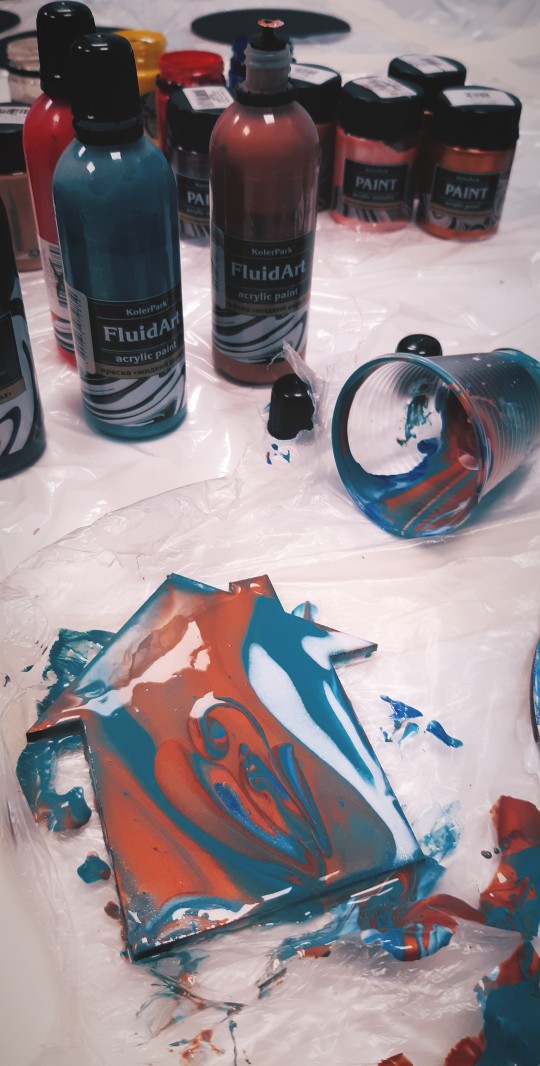
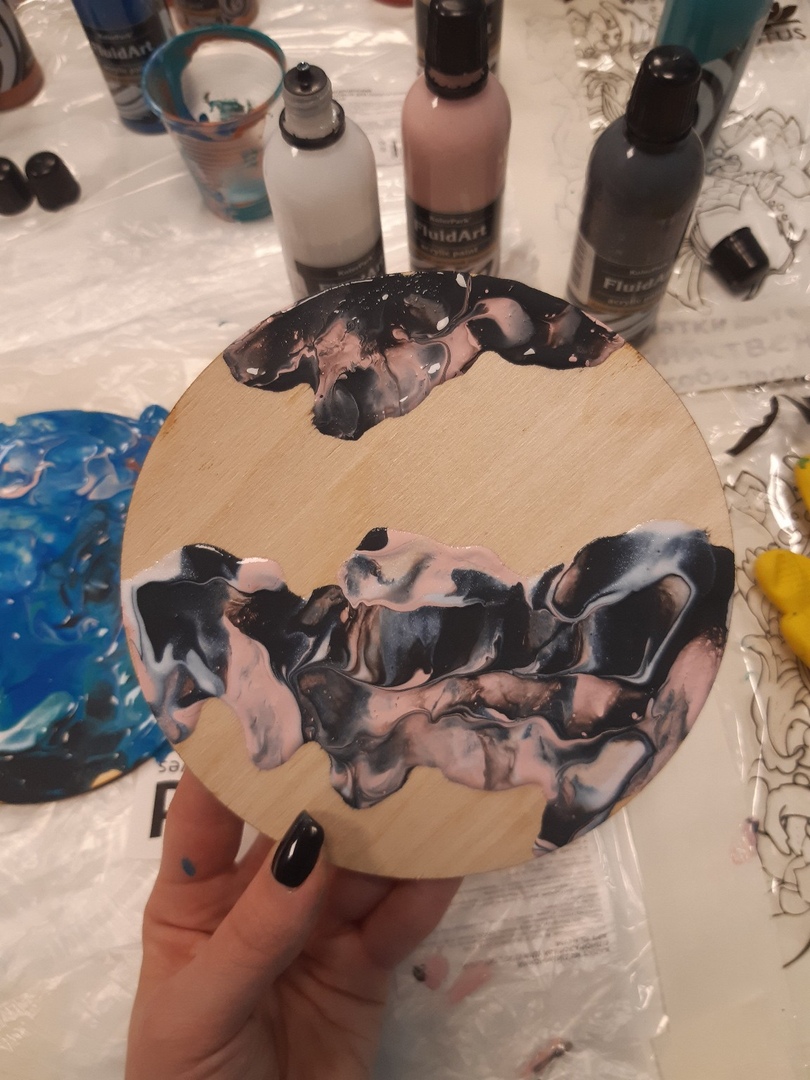
Fluid Art is a liquid acrylic painting technique as liquid art. This type of abstract painting is based on drawing with acrylic paint, which gives the fluid a fluid texture. Liquid acrylic of various colors is applied alternately or simultaneously to a canvas where the colors mix and form an abstract pattern. Different unique effects are created each time, depending on the choice of colors and additives.
What is Fluid Art?
Fluid Art is one of the most popular forms of contemporary art. This relatively new art form originated in the United States and is finding new followers around the world every day.
Here are the reasons:
Great for beginners. You don’t have to have drawing skills or experience with colors to work with Fluid Art. Anyone can practice this hobby for fun and get results in the form of beautiful paintings.
Does not require a large number of tools and materials.
Not time consuming. Half an hour is enough to draw a picture with liquid acrylic.
There are no limits to creativity and imagination. Acrylic filling is, first of all, a very creative and entertaining process. It is incredibly exciting to mix different acrylic colors and see how a real work of art is created with your own hands. The variety of techniques provides a huge field for creativity – with Fluid Art you will definitely not be bored.
Art therapy. Fluid Art is a perfect example of painting as well as meditation. Pouring colors, mixing, layering, even color flow naturally promotes meditation. Art and meditation do the same thing: they calm the mind and body in a healthy, positive way.
There are many different liquid art techniques, but first we recommend learning the three main techniques – Puddle Pour, Dirty Pour and Flip Cup.
Puddle Pour or fill with puddles.
Filling with puddles is a fairly simple method of pouring liquid acrylic. The color of one shade is poured on the canvas in the form of a smooth, beautiful puddle. The first color forms the base, in the center of which a slightly smaller amount of another color is poured. The puddles are arranged one above the other. Mix each color with thinner or water in a separate glass, mix with a wooden spatula. Pour the first color on the canvas to form a smooth puddle. Place other colors in the center of the puddle so that the puddles fit together. The canvas can be completely covered with small, even puddles, Or you can apply a couple of large puddles and then tilt the canvas in different directions and help the acrylic fill the entire surface of the painting.
Dirty Pour or dirty pouring technique.
According to technology, paints of different shades are poured into one common glass, mixed and poured on the canvas in one movement. Mix each paint with thinner or water in a separate cup, mix well. To create a cellular effect, add a few drops of silicone oil. Transfer all the colors to one glass and mix with a wooden stick. Pour the contents of the glass into the center of the canvas and tilt in different directions. Spread the paint over the entire surface.
In the inverted cup technique, paints of different shades are poured into a large cup and slowly poured onto the canvas while inverting. Mix each paint with water or thinner in a separate glass. If you want to get cells, add 2-3 drops of silicone oil. Pour the paints in layers in a common cup, do not mix them. Place the canvas face down on the cup so that the cup is in the center of the canvas, pressing the cup against the canvas, gently invert the canvas with the cup and wait for all the paint to drain. Slowly raise the cup so that the paint flows completely out of. The canvas has to tilted at different angles so that the liquid acrylic fills the entire surface and forms a pattern.
- Address: Zirņu 8, Riga
- info@krasa.lv
- +371 29217499 (Added WhatsApp)
- Working hours: 10-17, Saturday 10-14, Sunday: free